Study an MA in Early Childhood Education and Care (Distance Learning)

Advance your early years career with an online early childhood education and care master's degree from Norland
Our MA in Early Childhood Education and Care with specialisms is a flexible, part-time, online master’s programme designed for educators, early childhood practitioners, leaders and policy makers.
Rooted in Norland’s internationally recognised expertise in early childhood, this postgraduate programme allows you to benefit from leading research, specialist teaching and over 130 years of pioneering early childhood insight to deepen your expertise and elevate your impact.
Whether you work directly with young children or in related fields such as childcare policy, the programme enables you to build specialist knowledge in four key and fast-developing areas of early childhood:
- supporting behaviour
- food and nutrition
- sleep hygiene
- home-based pedagogy and care
Although these topics receive significant attention, they remain contested, particularly within the home-learning environment for babies, toddlers and younger children. Therefore, throughout the course, you will have the opportunity to explore the latest policy and research and develop depth in your understanding of these specialist strands so that you are well positioned to shape practice with evidence‑informed insight.
With a dedicated focus on the earliest years of childhood (0–3 years), our MA in Early Childhood Education and Care also supports you to extend the breadth of your own professional philosophy and practice, using the latest policy and research and drawing on areas such as sustainability, inclusion and advocacy.
While this postgraduate programme does not lead to Norland Nanny status, it equips you with the advanced skills, specialist knowledge and leadership capability to excel in a wide range of entrepreneurial and leadership roles within the early childhood education and care sector. Its flexible nature allows you to undertake your study in bite‑sized chunks, which allows you to work alongside your studies, as you will be expected to be working with or in a role that relates to young children for the duration of your studies.. You can choose to begin with a postgraduate certificate (Phase 1) and then develop through the postgraduate diploma (Phase 2) to a full master’s degree (Phase 3), with the option to stop and restart at each phase.
Sign up to our mailing list
Key course information
Duration
24 months
Programme start date
7 September 2026
Qualification
MA Early Childhood Education and Care
Course level
Postgraduate
Entry requirements
A bachelor’s honours degree or international equivalent at 2:2 or above in a relevant discipline.
View full entry requirementsDelivery
100% online
Application dates for 2026 entry
Applications open: 16 March 2026
Application deadline: 12pm GMT (midday), 6 July 2026
What you'll learn on our early childhood master's degree
During the first phase of your studies, you will investigate a range of contemporary issues underpinned by the latest cutting-edge research and undertake action research focused on up to two areas that you choose as specialisms, with the aim of effecting change and transforming practice.
The second phase of our early years master’s degree will build on the skills and competencies developed during the first phase and will prepare you for advanced research by offering opportunities to reflect on the complexity and nuances of your role and contribution to your community of practice. At the end of the second phase, you will be expected to formulate a detailed and comprehensive research proposal to guide your master’s dissertation. For direct entry, students will review course strand guidance and select their specialism(s) through a timetabled 1:1 discussion.
The third phase of studies will involve the conceptualisation, formulation and implementation of a research project of your choice and specialism(s), under the supervision and guidance of your Supervisor of Studies, and will culminate in the submission of a master’s dissertation.
Tailor your studies
On our master’s degree, you can tailor your studies to your professional interests and aspirations by selecting up to two specialist strands. These specialisms are:
- supporting behaviour
- food and nutrition
- sleep hygiene
- home-based pedagogy and care
In the first phase of your study, you will identify up to two specialist strands. This will help you to make an informed choice about your specialism(s), which you will then focus on throughout the second phase of your studies. Your work will culminate in your dissertation, through which you will demonstrate research skills and a deep understanding of your chosen specialism(s).
Teaching and learning activities offer focused input related to each strand, including current research and approaches relevant to a range of early childhood contexts, including home-based and family environments. Assessments are flexible and relevant to your working context and role. They are designed collaboratively between you and academic tutors, enabling you to explore topics and issues directly connected to your chosen specialism(s).
Read our programme specification
Specialisms
This strand supports your interest in young children’s behaviour. It considers how children develop self-regulation and enables you to investigate and reflect on how nurturing, emotionally supportive relationships provide optimal contexts for promoting children’s outcomes and resilience.
This strand uses food and everyday feeding practices as a critical lens through which to explore policy, family life and professional judgement within early childhood education and care. It moves beyond skills-based nutrition teaching to examine food as a relational and value-laden aspect of practice.
This strand explores current issues associated with infant sleep, along with the guidelines and policies that shape our understanding of sleep hygiene. It enables you to make informed choices about sleep routines and interventions that support personalised and thoughtful provision.
This strand critically examines home-based pedagogy and care as a distinct pedagogical approach that goes beyond childcare. Underpinned by longitudinal and emerging research, it enables you to construct situated knowledge and tailor approaches that are sensitively attuned to children and families.
What you'll gain from our master's degree
By completing our master’s degree, you will gain:
- Specialist knowledge and expertise
- a critical understanding of contemporary issues in the early childhood education and care sector
- advanced, research-informed knowledge in your chosen specialism(s)
- a critical understanding of your role as an early years professional, including sustainability, inclusion, advocacy and professional practice
- Advanced research skills
- design and conduct a research project within an early childhood context
- develop the ability to formulate new hypotheses
- Critical thinking and decision-making skills
- strengthen critical awareness and evaluation skills
- connect theory and practice to create solution-focused approaches
- understand the political, economic and social contexts that shape children’s lives and early years practice
- Vital professional skills
- apply theory confidently to practice, informed by your own research
- develop autonomy, professionalism and ethical judgement when working with children and families
- clearly and succinctly justify and communicate professional understandings to different audiences, including children, families, policymakers, early years practitioners and academics
- Transferable skills
- entrepreneurial and leadership capabilities
- effective communication that adopts multimodal approaches to interpret and present ideas
- strong organisational and reflective skills to support ongoing professional research, learning and development

MA in Early Childhood Education and Care modules
This module explores the ethical and practical dilemmas home-based educators and early years practitioners may encounter when supporting babies, children and families. Students will investigate contemporary topics related to the four specialist strands and examine the position of the child and families within societal and cultural contexts.
This module equips students with specialist skills within their distinct areas of supporting behaviour, food and nutrition, sleep hygiene and home-based pedagogy and care. Students will develop robust research, leadership and entrepreneurial skills. They will conduct systematic and rigorous action research aimed at effecting changes that enhance children’s and families’ lives. Research should be underpinned by innovation and remain fully conversant with the ethical complexities of researching with children and families.
This module encourages students to interrogate complex issues and challenges affecting their roles and professional identities. Through participation in professional spaces and reflection on personal and specialist trajectories in supporting behaviour, food and nutrition, sleep hygiene and home-based pedagogy and care, students will develop critical and inquiring stances that challenge professional moral codes, re-evaluate existing roles and establish new solution-focused ways of working that promote advocacy, inclusivity and diversity for babies, children and families.
This module acts as a precursor to the dissertation: Researching in the Home Environment and Beyond. It critically analyses and evaluates concepts that underpin and guide research in early childhood and examines how research principles apply to practice. It links to Innovation in Practice and may contribute to research supporting the development of a professional artefact or approach focused on supporting behaviour, food and nutrition, sleep hygiene and home-based pedagogy and care.
This module equips students with advanced research skills which enable them to plan a comprehensive research project that advances practical knowledge and professional understanding of their specialist strand and contributes to current debates on the topic. In this module, students will be required to formulate a robust proposal for their dissertation research project. Students will systematically and creatively address complex issues and formulate sound judgements based on professional practice and ethical conduct.
How our Early Childhood Education MA is structured
Delivery of our early childhood master’s programme will be online and will comprise synchronous tutorials and asynchronous teaching sessions. This flexible approach enables students to pursue their academic goals at their own pace and study around work.
Synchronous tutorials are tutorials that take place in real time.
Asynchronous teaching sessions can be accessed and completed independently. They have been carefully designed to provide you with a logical and sequential learning experience.
Because of the applied nature of the programme, students will ordinarily be expected to be working with young children, in a paid or voluntary role, for the duration of their studies. Where possible, they should also have access to relevant contexts in order to meet assessment requirements.
Students will be able to stack their credit, first enrolling on the PGCert, then then PGDip and finally the MA.
Students will have access to a virtual learning environment (VLE) and a virtual library to support them with their studies.

Timeline for students studying from September 2026
Sep-Dec 2026
Evolving Childhood Perspectives
Jan-Apr 2027
Innovation in Early Childhood Practice
May-Jul 2027
Professional Roles and Identities in the Early Years
Sep-Dec 2027
Researching Children's Lives: Critical and Creative Methodologies
Jan-Jul 2028
Dissertation: Researching in the Home Environment and Beyond
Workload
For every module on our master’s degree, you can expect to commit 10 hours of study per credit. This commitment includes contact time, online tutorials and independent study.
| 30 credit modules | 60 credit modules | |
| Contact hours (comprising online asynchronous recorded sessions and tasks) | 30 | 18 |
| Face-to-face (online supervision and tutorials) | 2 | 6 |
| Guided independent study hours (including hours for assessment preparation) | 268 | 576 |
| Total notional learning hours | 300 | 600 |
Contact hours include tutor-led online activities, recorded lectures and structured tasks.
Independent study includes reading and engaging with academic literature, preparing for assessments, completing asynchronous tasks, research and data collection.

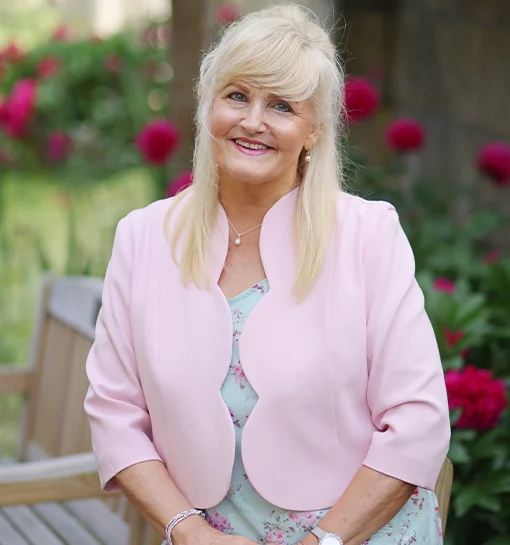
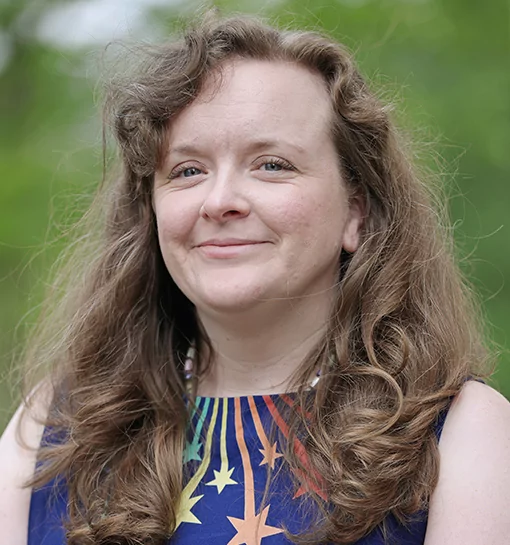
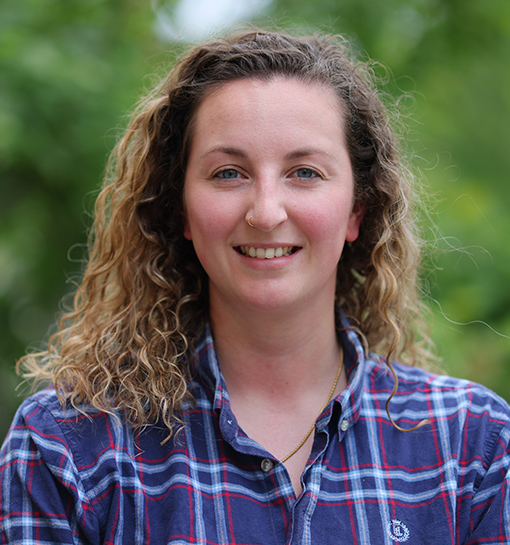
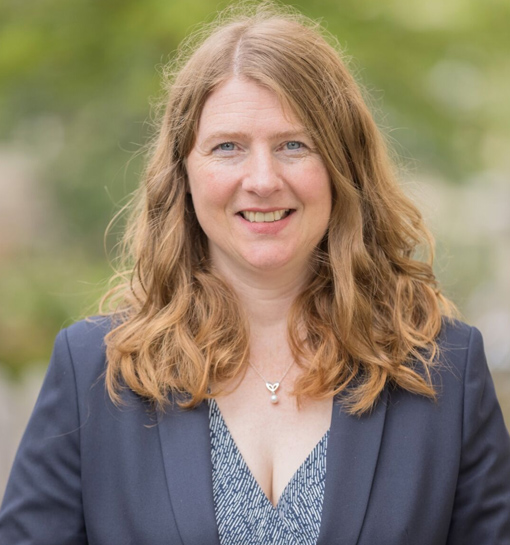
Meet our lecturing team on the MA Early Childhood Education and Care
How students will be assessed on our early childhood master's degree
| Phase | Module | Module number, assessment type and credit value |
|---|---|---|
| Phase 1 (PG Cert) | Evolving Childhood Perspectives: Focus on Supporting Behaviour, Food and Nutrition, Sleep Hygiene and Home-based Pedagogy and Care | Critical reflection 1 (oral) – 15 minutes Critical reflection 2 (written) – 2,500 words |
| Innovation in Early Childhood Practice | Project portfolio (written) – 5,000 words | |
| Phase 2 (PG Dip) | Professional Roles and Identities in the Early Years | Autobiographical professional presentation comprising oral delivery and visual aids – 20 minutes |
| Researching Children's Lives: Critical and Creative Methodologies | Proposal – 5,000 words (title to be agreed by student and Studies Supervisor) | |
| Phase 3 (MA) | Dissertation: Researching in the Home Environment and Beyond | Dissertation – 12,000 words |
On joining our MA programme, all students are allocated a Personal Studies Supervisor
The role of the Personal Studies Supervisor is to:
- Monitor students’ progress in all aspects of the course.
- Offer guidance in meeting deadlines, course requirements and regulations.
- Support students in target setting in relation to their academic progress.
- Signpost students to academic support systems.
- Foster a sense of belonging and positivity.
The Personal Studies Supervisor will meet with the student within four weeks of enrolment and then schedule two pre-booked evening appointments per module to offer academic support and assessment guidance.

Support for MA students from the Student Services team
As a master’s student, you will receive support from our dedicated Student Services team. The role of the Student Services team is to:
- Provide support specific to students’ studies and experiences, including both learning and pastoral/wellbeing support.
- Give support for study skills, along with help and advice in accessing and using the full range of resources to support their studies.
- Provide individual online sessions.
- Provide pastoral support through online drop-ins, individual appointments or scheduled appointments.
- Advocate for individual students if needed.
- Foster a sense of belonging and positivity.
The Student Services team is available online during normal working hours in the UK and will respond to emails and other requests for support during that time.
Other student support available includes:
- A student engagement system that allows for peer support through representatives.
- A Student Assistance Programme, available 24/7.
- Effective monitoring of academic achievement and wellbeing through the Improving Progress Policy and Cause for Action processes.
What you can do with our master's degree
Graduating from our MA will equip you with advanced knowledge of the early years. You will develop your critical‑analysis skills and deepen your understanding of early childhood. This will open up a range of career pathways across the early years sector.
Possible career paths after graduating include:
- Academic and research roles – inspire future generations of early years practitioners through teaching or lecturing, or by contributing evidence‑based research to the early years sector.
- Specialist home-based consultancy – provide expert guidance to families on areas such as sleep, nutrition and/or behaviour.
- Leadership and management roles – lead teams and oversee provision for children in nurseries, early years settings or child‑focused organisations.
- Policy, advocacy and charitable work – influence early years policy, champion children’s rights or work within charities and non‑governmental organisations (NGOs) to improve outcomes for children.
- Specialist nanny roles – progress from experienced nanny to specialist practitioner with evidence‑informed insight supporting behaviour, food and nutrition, sleep hygiene, and home‑based pedagogy and care for babies and toddlers.

Entry requirements for our master's degree in early childhood education
You should have one of the following:
- A bachelor’s honours degree or international equivalent at 2:2 or above in a relevant discipline.
- A teaching qualification (gained after at least the equivalent of two satisfactory years of higher education) plus at least five years of recent relevant experience.
- An advanced diploma in education plus at least five years of recent relevant experience.
- The Norland diploma and fully qualified Norland Nanny/Norlander status plus at least five years of recent relevant experience.
Non-standard entry to the postgraduate programme will be considered for applicants with more than five years of recent experience working with young children and their families or in a related early childhood role.
If you do not have a bachelor’s honours degree or international equivalent at 2:2 or above in a relevant discipline, or significant time has passed since you studied at degree level, you will be asked to complete an academic task after you have submitted your application. If your application is accepted, this task will be considered alongside the interview.
Recent experience must have been undertaken within 10 years of entry to the degree programme.
If you are unsure whether you will meet our entry requirements, please contact our Admissions team.
Due to the applied nature of the postgraduate programme, recent experience of working with children would be beneficial, and you would ordinarily be expected to work with young children aged 0–3 years for the duration of the programme. This can be either in paid or voluntary employment.
Acceptance is subject to a satisfactory Disclosure and Barring Service (DBS) (formerly known as the Criminal Records Bureau) Enhanced Disclosure check, or equivalent overseas procedure. If you have lived in another country within the last five years, you must obtain a police certificate or certificate of good conduct from that country as well. You will also be required to join the Update Service (or overseas equivalent) and ensure your subscription is renewed throughout your studies. Further details will be sent to you after you have made your application. There are fees for these check and update services, in addition to the tuition fees.
As this is an online master’s degree, you will need regular access to a device (such as a laptop) with a microphone and camera, as well as a reliable internet connection. Norland will provide access to an online virtual learning environment (VLE) and virtual library.
If you do not have UK qualifications, we will need to check your equivalent international qualifications using the UK ENIC database to confirm that your qualifications meet our minimum requirements and there is a charge for this service.
As our master’s degree is delivered via distance learning, you will study outside the UK and therefore will not require a visa. If you wish to visit the UK for short periods to take part in study-related activities, such as attending graduation, you may enter as a Standard Visitor. You will be responsible for applying for the visa, ensuring you meet the eligibility requirements and only undertaking permitted activities. Further information on the Standard Visitor visa route is available on the UK government website
If you’re an international student, you may need to demonstrate that your English language skills are sufficient to study for a master’s degree at Norland. Unless you are a national of a majority English speaking country, you will need to submit an English language qualification that’s recognised by Norland. Your English language qualifications must have been achieved within two years of the course start date.
If your first language is not English, but within the last two years you completed your degree in the UK, you may be exempt from our English language requirements.
We accept the following English language tests:
- IELTS Academic: 6.5 overall score with no less than 6.0 in each component skill
- Pearson Test of English Academic (PTE Academic): 62 overall score with no less than 59 in any element
- TOEFL iBT: 90 overall score with a minimum of 20 in all 4 components
We may accept other English language tests.
You will be responsible for paying for the English language test.
Please contact admissions if you are not sure if you meet our English language requirements.
Tuition fees — 2026 entry
| Total tuition fees | Total tuition fees with Norlander discount | |
|---|---|---|
| 2026 entry | £9,000 | £6,750 (25% discount) |
Our master’s degree is delivered through five modules. Modules 1-4 are worth 30 credits each and module 5 is worth 60 credits.
Each 30 credit module costs £1,500 (£1,125 for Norlanders)
Please note: Tuition fees for students starting our MA in Early Childhood Education and Care in September 2027 and in successive years are subject to annual review and may increase by up to 5%. Norland will inform students of fees in advance in line with our Fees, Compensation and Refunds policy.
Paying your fees and additional costs
Prior to the start of each module, the Norland finance team will issue an invoice that includes the Norland bank payee details. This invoice will be sent to students and, where requested, or where fees are paid directly by them, to the student’s parents, carers or guarantors.
Payment can be made by direct bank transfer, debit or credit card, cheque or via Direct Debit instalments. Each module’s tuition fees are invoiced and due immediately on the first day of each term, unless collected by Direct Debit.
Module breakdown — 2026 entry
- Module 1 — September-December 2026 (30 credits). Pay at start of module or pay monthly in October, November and December
- Module 2 — January-April 2027 (30 credits). Pay at start of module or pay monthly in February, March and April
- Module 3 — May-July 2027 (30 credits). Pay at start of module or pay monthly in May, June and July
- Module 4 — September-December 2027 (30 credits). Pay at start of module or pay monthly in October, November and December
- Module 5 — January-July 2028 (60 credits). Pay at start of module or pay monthly in February, March, April, May, June and July
If you have any questions about funding your studies, please contact our Finance team.
Device and Wi-Fi
As the course is delivered online, students are required to have access to a laptop or desktop computer and a reliable Wi-Fi connection in order to fully engage with lectures and online learning materials.
Disclosure and Barring Service (DBS) check or equivalent
If you do not already have a Disclosure and Barring Service (DBS) Enhanced Disclosure Update Service or equivalent overseas procedure, you will be required to pay for this check and update service.
If you based in the UK, the DBS check costs approximately £65 with an annual Update Service fee of £16 for the duration of your studies. If you have lived outside the UK within the last five years, you must obtain a police certificate or certificate of good conduct from that country as well as completing the DBS application. Costs vary by country.
If you are based overseas, the costs of the equivalent overseas criminal record check procedure and update service will vary by country.
If you don’t have UK qualifications, you’ll need to arrange for the UK ENIC to confirm your qualifications and there is a charge for this service.
If you’re an international student, you may need to demonstrate that your English language skills are sufficient to study our master’s degree. Please see our entry requirements section for more information on this. If you have to complete an English language test, you will be responsible for the cost.
Master’s students living in the UK may be eligible for a Postgraduate Master’s Loan to help with tuition fees and living costs. Funding for postgraduate loans varies depending on whether you live in England, Scotland, Wales or Northern Ireland.
Please note that you must be enrolled to complete the master’s degree to be eligible for a Postgraduate Master’s Loan. You cannot get a Postgraduate Master’s Loan for a postgraduate certificate or postgraduate diploma.
Visit the UK government website to find out more about the Postgraduate Master’s Loan, including eligibility, what you will receive and how to apply.
Norland is required to maintain and regularly review its refund and compensation policy for both undergraduate and postgraduate degree programmes. Overall, Norland experiences a very low rate of student withdrawal and is committed to doing everything possible to support student success and wellbeing.
Our master’s degree is delivered online and we ensure that all course components are appropriately resourced to support students throughout their postgraduate studies. In addition, Norland provides particularly strong pastoral care to support student wellbeing and progression.
However, due to unforeseen events and situations, students sometimes choose to leave Norland. If you decide to leave, it is important to note that tuition fees remain due for the current module. The implications of this policy are shown in the table below. Read our Fees, Refund and Compensation Policy for more information
Implications of our Refund and Compensation Policy for 2026/27
| Formal notice to end the Contract (leave Norland) received | Total fees that will be due | (Norlander fee in brackets) | Total |
| By 4 January 2027 | Module 1 | £1,500 (£1,125) | £1500 (£1,125) |
| By 26 April 2027 | Module 1 and 2 | £1,500 (£1,125) x 2 | £3,000 (£2,250) |
| By 26 July 2027 | Modules 1-3 | £1,500 (£1,125) x 3 | £4,500 (£3,375) |
| By 3 January 2028 | Modules 1-4 | £1,500 (£1,125) x 4 | £6,000 (£4,500) |
| 4 January 2028 or thereafter | Modules 1-5 | Full fees | £9,000 (£6,750) |
It is important to ensure that Norland is properly resourced to offer the very best student experience. It is therefore critical that fees are able to reflect this commitment. Consequently, our tuition fees are reviewed annually and set (and published on our website) at least one year in advance, and may increase by up to 5% for each year of entry. The level of any increase is set with reference to student affordability, anticipated inflationary pressure and necessary course enhancement.
Applying for our postgraduate course
Applications for 2026 entry for our early childhood master’s degree open on 16 March 2026 and will close on 6 July 2026, 12pm GMT (midday).
Whether you are a UK or international student, you should make your application directly to Norland. You will be expected to submit a personal statement as part of your application — see the Writing your personal statement section below.
If you meet our entry requirements, you’ll be invited to attend a virtual interview with a member of our academic team.
If you do not have a bachelor’s honours degree or international equivalent at 2:2 or above in a relevant discipline, or significant time has passed since you studied at degree level, you will be asked to complete an academic task after you have submitted your application. If your application is accepted, this task will be considered alongside the interview.
Submitting your application
To apply for our master’s degree, you will need to complete our online application form. You can save your progress as you go, so you do not need to complete it all at once.
To help you prepare, please make sure you have the following documents ready to upload:
- personal statement
- qualification certificates
- qualification transcripts
- references
- CV (optional)
- English language certificate (if required)
If you are a Norlander, you are not required to submit your Norland certificates or transcripts as we will access these through our records.
If you have any queries, please get in touch with the admissions team.
+44 (0)1225 904050 [email protected]Writing your personal statement
Your personal statement is your opportunity to evidence your expertise and the experience you’ve gained. It allows you to talk about yourself, your early childhood areas of interest, and to demonstrate the value you will bring to Norland.
You are asked to respond to two questions:
- How the Norland MA in Early Childhood Education and Care relates to your career, experience and studies so far. (500 words max)
- How pursuing the Norland MA in Early Childhood Education and Care will enhance your professional practice in early childhood and support you with your future career aspirations? (500 words max)
Please include both practical evidence and the personal qualities that set you apart as an early years professional. In your response to the first question, explain why you want to study our master’s degree, how your previous study and experience with children have shaped your decision to apply, and how your professional identity and approach align with our MA. You may also draw on other relevant experiences and achievements. For the second question, outline your future career aims and explain how the Norland master’s degree will help you achieve them.
Please upload your completed personal statement document to our online application form.
Plagiarism and AI use in your application
Please be aware that Norland uses plagiarism detection software to assess the personal statement, and any academic task if requested. You will be asked to sign a declaration confirming that your work is your own. Applicants may make appropriate use of AI tools as prompts for ideas or structure, but not for writing the core content which is considered academic misconduct. Interviews are used to provide further information about your suitability to study at Norland. Any use of AI tools during an interview hinders this approach and is therefore prohibited. If there are serious concerns that your interview did not represent your true capabilities, this may put your application at a disadvantage.
The application process
16 March 2026
You can submit your application via our online application form.
From April
Virtual interviews take place between April and July.
June 2026
Our webinar takes place for you to learn more about our master's degree.
6 July 2026
Applications close for 2026 entry at 12pm (midday) GMT.
Read our key information before you begin your application
Programme specification
Read the programme specification for our MA in Early Childhood Education and Care.
Read programme specificationEntry requirements
Before you apply, you’ll need to ensure you meet our academic and other entry requirements.
View entry requirementsView policies and procedures
Please read our our admissions policies and procedures including our Accreditation of Prior Learning.
View policies and proceduresRead our student protection plan
Our student protection plan outlines how we preserve the continuation and quality of study for students.
View student protection planRegister your interest in studying at Norland to stay connected
Sign up to our mailing list to receive the latest study news and information about our master’s degree.
Frequently asked questions
An early childhood studies postgraduate degree is an advanced programme for early years professionals, offering the opportunity to explore specific areas of child development in depth. Norland’s MA Early Childhood Education and Care focuses on the earliest years of childhood (0–3 years). Our master’s degree is tailored to home-based educators, nannies, early years practitioners, early years leaders and policy makers and enables students to develop expertise in specialist areas including supporting behaviour, food and nutrition, sleep hygiene and home-based pedagogy and care.
An MA is a postgraduate degree at Level 7. An undergraduate degree, such as Norland’s BA (Hons) Early Childhood Education and Care degree and Norland diploma, is a bachelor’s degree at Level 6.
A postgraduate early years degree can unlock a wide range of career opportunities in education, research, and beyond. By deepening your understanding of child development, you’ll gain the expertise to progress into senior roles and specialist areas. Popular career paths include:
- academic and research careers in early childhood education, such as becoming an early years lecturer
- policy and government roles influencing early years policy
- consultancy and specialist advice, providing expert guidance on early years curriculum and specialisms
- leadership and management roles in early years settings
- advocating for children’s rights and wellbeing through charity and NGO work.
Upon completion of Norland’s MA degree, graduates will be equipped with the skills and specialist knowledge to excel in a range of entrepreneurial and leadership roles within the home environment and beyond.
No, only graduates from our BA (Hons) Early Childhood Education and Care and Norland diploma course will qualify as Norland Nannies.
Anyone with a relevant undergraduate degree (for example in education, child development or early childhood education and care) and a passion for supporting children in their earliest years can study an MA degree in this subject area. At Norland, we look for applicants who have a 2:2 or above in an early years or related undergraduate degree. Non-standard entry to the postgraduate programme will be considered for applicants with more than five years of recent experience working with young children and their families or in a related early childhood role. View our entry requirements to find out more about applying to our early childhood postgraduate course.
Yes. Our online master’s degree can be studied part-time, allowing you to learn flexibly around work.
If you are a fully qualified Norlander without the degree but with at least five years of recent relevant experience working with young children and their families or in a related early childhood role, then you will meet our entry requirements to be considered for a place on the master’s degree. You will be asked to complete an academic task to demonstrate your capability to study at postgraduate level, after you have submitted your application. This task will be considered alongside the interview.
Yes. If you’re a fully qualified Norlander, you’ll be eligible for a 25% discount on tuition fees for our early childhood education master’s degree.