Learn how to become a Norland Nanny, including training length, entry requirements and career pathways
Discover our early childhood training
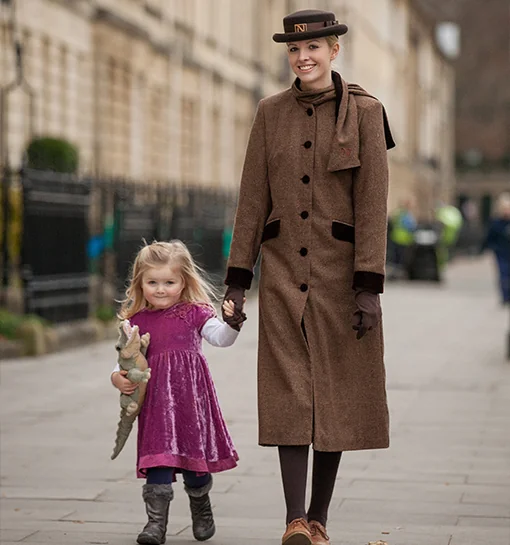
What is a Norland Nanny?Being a Norland Nanny or Norlander, as our professional graduates are known, is a professional career for those passionate about working with children and playing a pivotal role in their development and wellbeing.
Being a Norland Nanny or Norlander, as our professional graduates are known, is a professional career for those passionate about working with children and playing a pivotal role in their development and wellbeing.
As a Norland Nanny, you’ll nurture the growth of the children in your care, shaping their early years, witnessing their milestones, fostering creativity building long-term relationships with families.
You’ll build one-to-one relationships with children in your care and work closely with parents and families to create the optimal environment for each child to thrive.
You’ll enjoy a lifelong career as a highly sought-after professional graduate Norland Nanny, with access to your own dedicated employment agency, professional association and continuing professional development training.
What does a Norland Nanny do?
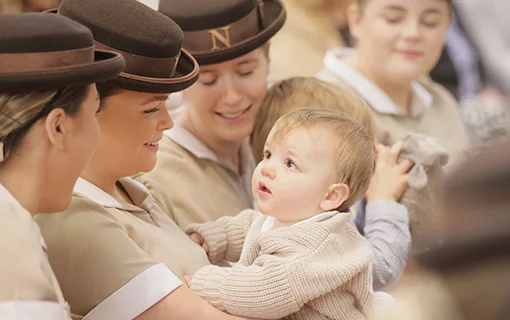
As a Norland Nanny, you’ll be caring for children in the family home. Each nanny role is different, depending on the needs of individual families and the children in your care.
The main duties of a Norland Nanny include:
- Working alongside parents and families to look after the children in your care, supporting their optimal growth, development and learning.
- Recognising the central role played by parents and families in the lives of children, seeking and respecting their views and keeping them well informed.
- Planning, delivering and evaluating all care routines for the children in your care, including hygiene, weaning, sleep routines, transitions and self-regulation.
- Planning, delivering and evaluating all play, learning and educational activities both inside and outside the home.
- Responding to the changing needs and preferences of each child as they grow, develop and learn.
- Identifying the interests of each child to support their learning and development.
- Maintaining a healthy, clean and safe environment for the children in your care both inside and outside of the home.
- Working alongside healthcare professionals and/or other childcare practitioners to support the children in your care.
What qualities do you need to be a Norland Nanny?
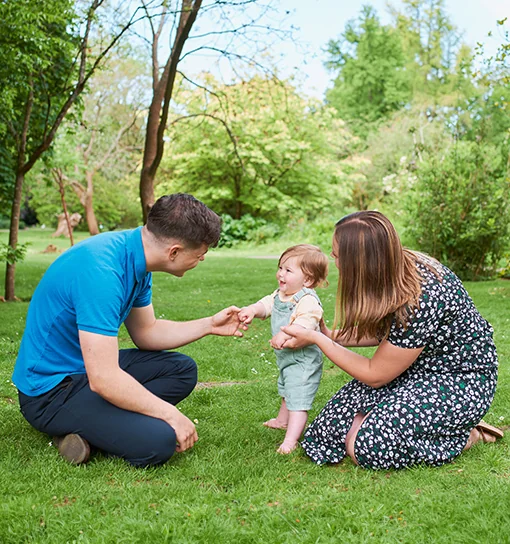
To be a successful Norland Nanny, you’ll need a combination of compassion, professionalism and adaptability. While formal training and qualifications are essential, the role also requires strong personal qualities that support children’s development and wellbeing within the family home.
- A loving and caring attitude – wanting to be involved in a child’s life and routine is crucial to being a nanny, as this will be your daily routine.
- Communication – you’ll spend a lot of time each day communicating with children, and then communicating their needs to their parents, carers, family, and healthcare and childcare practitioners so you’ll need to be a good communicator and able to adapt your communication style.
- Creativity / Innovation – you’ll need to be a creative problem solver as things can change at the last minute. For example, if you’ve planned an activity outdoors and it’s terrible weather, you’ll have to come up with something else – like moving an outdoors picnic to a teddy bear’s picnic indoors instead.
- Organisation / Time management – you must come to each day with activities prepared, as well as making the most of nap time to plan and cook nutritious meals in a timely way, and take a break for yourself to recharge your own batteries – all whilst prioritising the care and wellbeing of the children.
- Reflectiveness – learning from your experiences, both mistakes and successes, is crucial so you can apply those lessons and develop as a professional. It could be learning what worked with a different child of a similar age, or getting to know the child you’re working with and figuring out their likes, dislikes and emotional patterns.
- Resilience / Staying positive – working with children, things don’t always go to plan, and it’s essential to be able to learn from challenges or different situations and try not to be too critical of yourself. Your attitude will also support children to be resilient too, a critical life skill.
Learn more about the expectations of a Norland Nanny in our Norland Nanny job description
Join us for our Open Day on Saturday 16 May — book now!
Join us for our Open Day on Saturday 16 May and explore our BA (Hons) Early Childhood Education and Care and Norland diploma training. Meet students, speak with staff and explore the beautiful city of Bath.
Book now
How do I become a Norland Nanny?
To become a Norland Nanny, you’ll complete two fully integrated qualifications unique to Norland: our BA (Hons) in Early Childhood Education and Care degree and the prestigious Norland diploma.
Norland’s gold-standard training blends academic study with extensive practical experience, ensuring graduates are fully qualified with strong early years knowledge and hands-on skills developed through real-world placements.
Over a third of your time at Norland will be spent gaining practical experience on placement (1,265 hours) in a minimum of eight different early years settings and a 25-hour newborn experience.
On completion of the degree and placements, you’ll gain industry-recognised Early Childhood Graduate Practitioner Competencies (ECGPC) status in both early childhood academic knowledge and practice skills.
In your fourth and final year, you’ll complete the Newly Qualified Nanny (NQN) year, working in paid full-time employment while being supported and assessed by Norland. Successful completion leads to the professional title of Norlander or Norland Nanny.
What do I need to become a Norland Nanny?
BA (Hons) in Early Childhood Education and Care
You will study Norland’s undergraduate degree alongside integrated diploma modules, so you can apply early years theory in practice while building confidence through hands-on experience across a range of early years settings.
Explore our degree and diploma modulesNorland diploma
Delivered alongside the degree, the Norland diploma focuses on the practical aspects of professional nannying, including caring for babies and young children, professional communication, nutrition, cooking and sewing, ensuring you are fully prepared for life as a Norland Nanny.
Placements
Practical experience is a core part of Norland training. You will spend around 35% of your course on placement, gaining experience across at least eight placements over the three years, including families, hospitals, schools and nurseries.
Explore our varied placement programmeNewly Qualified Nanny year
In your fourth and final year, you will work full-time in paid employment as a newly qualified nanny, supported and assessed by Norland. There are no tuition fees for this year, and successful completion leads to the professional title of Norlander or Norland Nanny.
Journey to becoming a Norland Nanny
Once you have successfully applied, met our entry requirements and interviewed, you will be offered a place to study at Norland.
Successfully complete three years studying our BA (Hons) Early Childhood Education and Care degree and Norland diploma.
Spend 34 weeks on placement in a minimum of eight different settings including nurseries, schools, hospital wards, specialist schools and with families.
Complete your third and final year degree modules and work-based project to graduate from your degree.
Complete the final diploma module, the NQN year, as a Newly Qualified Nanny in paid full-time employment with a family, supported by our dedicated NQN team.
Graduate from the Norland Diploma and gain the professional title Norland Nanny or Norlander.
Securing your place at Norland
Interested in the first step to becoming a Norland Nanny by applying to Norland? Find out more about the application process in our Norland Unwrapped: Applying, funding and accommodation webinar.
Do I need work experience to become a Norland Nanny?
Before coming to Norland to train as a Norland Nanny, we expect applicants to have some experience of caring for or working with children such as babysitting, nannying, volunteering in a school, nursery, or youth organisation, or helping to care for younger relatives.
You’ll gain extensive hands-on experience throughout your training, spending 34 weeks on placement in a wide range of early years settings.
Once you have successfully completed three years of degree and diploma training at Norland, you will complete a fourth year as a Newly Qualified Nanny in paid employment with a family to earn the prestigious diploma and professional Norland Nanny title.
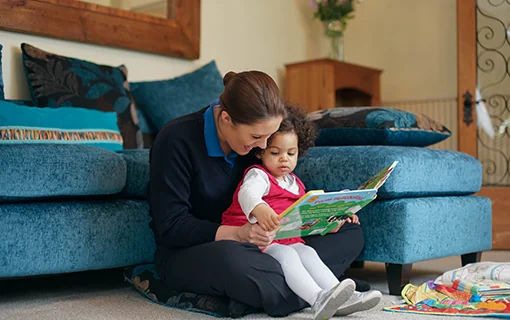
My favourite thing about Norland are the placements. We have so many different opportunities throughout our training – early years settings like nurseries and schools, in the family home and even a hospital placement. Every placement is unique and allows us to put all our hard work to use.Ayeisha, Set 45 Student Read Ayeisha's story
What's the difference between a nanny and a Norland Nanny?
Norland Nannies have completed the highest level of nanny training, which is only available at Norland, and are considered to be the best early years practitioners in the world. Only qualified Norlanders can work through our in-house agency, the Norland Agency, to access their pick of jobs and one of the highest average graduate salaries.
Norland Nannies are autonomous, unsupervised, trustworthy, well-educated, intuitive, professional, highly skilled graduates who work in a family home to care for and educate children, whilst providing fundamental support, advice and guidance for the whole family, drawing on cutting edge research in pursuit of excellence. Research on home-based
childcare has highlighted how nannies become a support system for parents beyond the caring of children.
The role of a Norland Nanny is a far more responsible job than that of a typical early years practitioner who works as part of a team or under supervision. Norland Nannies are classified as highly skilled professionals under the International Labour Office’s International Standard Classification of Occupations, which distinguishes between occupational groups responsible for the care of pre-school children. It singles out one set of individuals that promote the development of children below primary school age and are likely to have tertiary qualifications in education and early childhood development. The standard description of this group exactly fits the graduate Norland Nanny and is identified in the same major group as university and higher education teachers and primary school teachers.
What are the diferent types of Norland Nanny roles?
Frequently asked questions about nannying
The working schedule for a Norland Nanny varies from role to role.
Live-out nannies tend to work 50 hours per week, usually 10 hours per day five days per week, whereas live-in nannies usually work 60 hours per week, so 12-hour days.
- A live-in Norland Nanny generally works up to 12 hours per day and accommodation is provided by the family
- A live-out Norland Nanny generally works 10 hours a day and travels to and from the home each day
Many Norland Nannies work Monday to Friday, and the Norland Agency agency recommends they have two consecutive days off per week.
Although a traditional ‘full-time’ nanny role does have long hours, there are many options and nannying can often offer flexible arrangements. It is possible to work part-time, for example 4 days per week, or as a rota nanny working one week on, one week off, or temporary roles that allow you to have periods of not working in between roles.
After you graduate as a Norland Nanny, you will have access to our in-house agency, the Norland Agency. There are not many professions which can offer guaranteed employment opportunities but, at the Norland Agency, demand for Norland Nannies has outstripped supply from day one and continues to do so today. You’ll have access to the agency’s job list and support with the process of getting a job, including contracts, criminal record checks (DBS) and verifying families.
How much you make as a Norland Nanny depends on different factors including location, responsibilities, hours and expectations. Norland Nannies can command very high salaries, depending on the role, their experience and any additional skills. At Norland, we believe that highly skilled childcare professionals should receive a fair pay given the responsibilities of the role, their expert knowledge and specialist skillset.
Norland Nannying offers a flexible and varied career working with children. Part-time, temporary, maternity and rota nanny roles can work around other commitments, voluntary work, further study or caring for a family of your own. Many Norlanders who pursue other careers will return to nannying at different points in their lives.
In addition to nannying, there are a wide range of career options available to Norlanders. With their specialist degree and diploma training behind them, many Norlanders have gone on to pursue successful careers in education, healthcare, academia, consultancy and in leadership roles.
Find out about the different early years careers that Norland Nannies have pursued on our 130 career pathways page.
Other Norlander career pathways

Nursery Owner
Julia shares her experience of establishing her own nursery, an Ofsted Outstanding nursery setting.
Read Julia's story
Breastfeeding Counsellor
Louisa shares her journey as a Postnatal Doula and Breastfeeding Counsellor, after her career as a nanny.
Read Louisa's story
PhD in developmental psychology
Maihri describes how Norland transformed her confidence in her academic abilities and led her to pursue research.
Read Mhairi's story
Head of Startwell: Strategic lead for early years
Helen shares her varied career pathway through education and the early years, as well as her current role as Strategic Lead.
Read Helen's storyRegister your interest in studying at Norland to stay connected
Sign up to our mailing list to receive the latest study news and information about our open days, funding opportunities and student life.