From degree to practice: Madeleine’s story
17 November 2026
At Norland, academic learning and practical experience go hand in hand. In this three-part blog series, we hear from students about how their degree learning connects with their practical training and experiences working with children and families.
The BA (Hons) Early Childhood Education and Care degree, studied alongside the Norland diploma, combines evidence-informed academic study with hands-on training. Students put their learning into practice through 1,265 hours, or 34 weeks, of placement experience across a minimum of eight early years settings, alongside specialist practical and employability training.
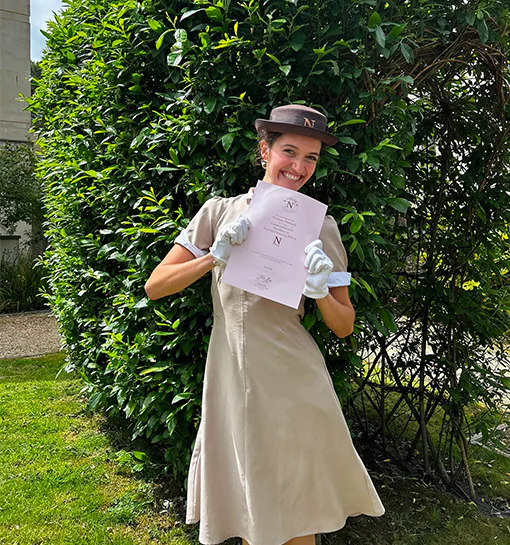
In the first of the series, third-year student Madeleine (Set 148) shares how she brings theory and practice together, and how her degree learning informs her diploma training and work with children and families.
What have you learned through your early childhood degree that has influenced the way you work on placement?
“The early childhood degree has really helped prepare me for going out on placement. As part of the ‘Working Professionally with Parents and Carers’ module in my second year, we completed a case study assessment which involved interviewing parents on placement about what kind of nanny they would ideally want in their home. We then explored the professional partnership between parents and nannies. The questions I asked during the interview were really helpful in establishing shared goals and expectations for the placement, and they’ve now become a routine part of my ‘getting to know the family’ process.”
Can you share an example of bringing something you learned in your early childhood degree to life on placement?
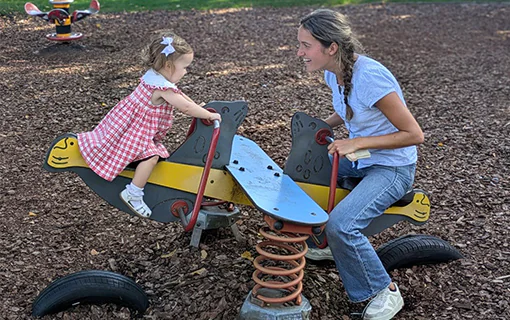
“In our self-regulation modules, we talked about the benefits of using a visual timetable to help children understand and feel more in control of their routines. We also learned about scaffolding and how a trusted adult can provide the right support and tools until a child feels confident enough to complete a task independently (Chaudhary and Pillai, 2019). I put this into practice during my second-year residential placement by creating a custom morning and night-time routine checklist for my charge. It helped them feel more regulated during these transitions and more confident about getting themselves ready for the day.
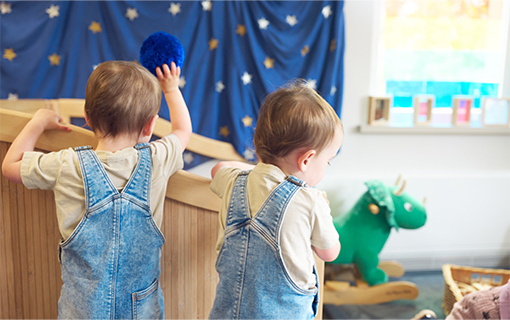
“More recently, I completed a live-in placement in London with six-month-old twins. My learning from the ‘A Focus on Siblings’ optional module was really helpful because we had explored how twins can learn new skills by mirroring one another. I was able to see this in action as I began the weaning process with them and watched them observing each other trying and exploring different foods.”
Which module or topic has been particularly valuable in your practical training?
“I have found the ‘Practice in the Early Years’ module particularly helpful on placement. As part of the module, we work through the Graduate Practitioner Competencies (GPCs), which connect what we are learning on the degree with our real-life experiences on placement. Taking the time to reflect, make connections and think ahead while completing my GPCs helps me understand where I feel most confident in my practice, as well as where I can continue to develop.”
How has combining early childhood degree study with placements helped you develop professionally?
“Balancing lectures, assessments and time on placement has helped me develop professionally by strengthening my time-management skills. This is incredibly important when working as a nanny, when you might be juggling playtime, cooking, cleaning and outings throughout the day. Lectures also give us lots of experience in professional communication through discussions with our peers and lecturers. Communication is integral to our role as nannies and will help support our continued professional development.”
How does the degree prepare you for your future career as a Norlander?
“The degree is part of what makes studying at Norland so unique. We have the opportunity not only to gain real-life experience with children, but also to develop our knowledge in areas such as neuroscience, current affairs and children’s health and wellbeing. When we’re fully qualified, we’ll have extensive hands-on experience alongside a university degree.”
If you want to find out more about studying at Norland University, join us for our upcoming open events.
Book your place