Norland students explore renowned Pistoian approach to early years education in Italy
27 May 2026

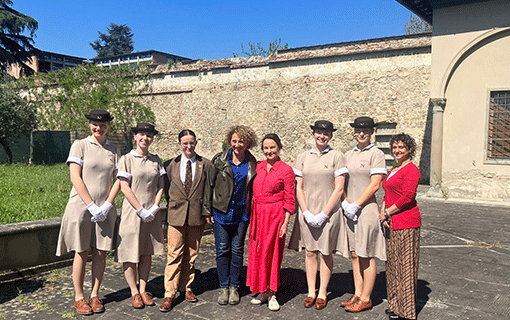
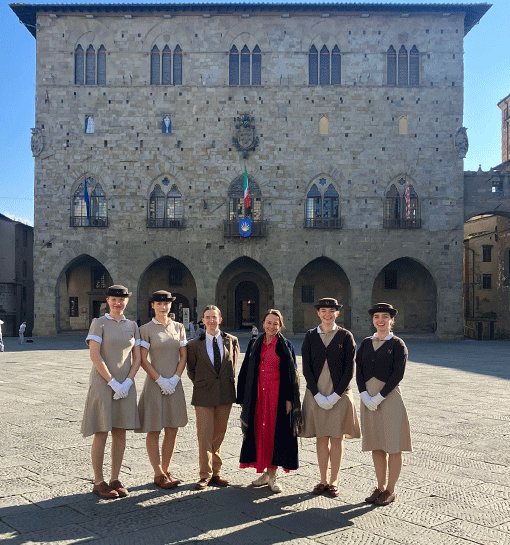
A group of Norland students recently travelled to Pistoia, Italy, for Norland’s annual international study visit, which provides BA (Hons) Early Childhood Education and Care students with the opportunity to explore the renowned Pistoian approach to early years education and see theory brought to life in practice.
Accompanied by Early Years Lecturer Dawn Evans, students visited a range of local early years settings (nidi and scuole d’infanzia), workshops and cultural spaces, gaining first‑hand insight into the Pistoian approach.
This philosophy places children at the centre of learning and views them as capable, creative individuals whose ideas, interests and relationships shape their educational experiences.
Reflecting on the visit, Dawn Evans explained how the trip brought theory to life for students:
“The study visit included visits to the early education service nidi (for children aged 6 months to 3) and Scuole d’Infanzia (for children aged 3 – 6) , where students learned about environments, spaces and resources for young children. We explored how these settings work in partnership with parents and how children’s learning is documented through photographic and visual methods.
“Students were able to see how creativity, care and culture are embedded throughout everyday practice. Settings shared examples of creative projects inspired by children’s interests, alongside insights into the city’s annual Children’s Festival, which celebrates childhood across Pistoia.
“We learned about the values of education in Pistoia and their vision for children as competent, creative citizens. A highlight of the trip was taking part in an immersive storytelling experience at a literacy workshop.”
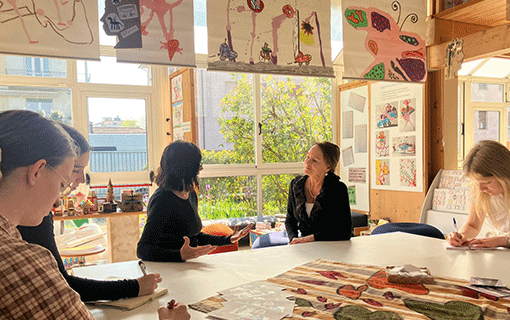
Each day concluded with a guided reflection session led by Norland’s host in Pistoia, Dr Rose Drury, allowing students to connect their observations back to key themes in Pistoian pedagogy.
“These reflection sessions gave students the opportunity to share their learning and link it to themes such as creativity, care and culture, which are central to the Pistoian approach. The visit enhances student learning by encouraging collaboration with families, creative learning environments and an understanding of pedagogical perspectives in a different country.”
Seeing theory in practice
For first‑year student Ella (Set 149), the trip was both inspiring and affirming.
“The trip to Pistoia has really instilled my passion for early years education. I observed the care and thought that every teacher and member of staff put into their practice. Being able to go into the settings and see the pedagogy first‑hand was amazing, as I could interact with practitioners and share a passion for early years education.
“Seeing settings in real life helped me understand how theory can be put into practice. It also allowed me to talk to teachers and pedagogical co‑ordinators about why their approach works, which really reinforced how beneficial the pedagogy is.
“Since coming back, the trip has been constantly on my mind. The discussions we had are already shaping how I think about choosing resources and setting up environments in my future practice.”
Being able to go into the settings and see the pedagogy first‑hand was amazing, as I could interact with practitioners and share a passion for early years education.First-year student Ella (Set 149)
A holistic, collaborative approach
Second‑year student Madeliene (Set 148) highlighted how seeing influential educational theories in action strengthened her understanding of child development.
“Seeing the influence of Maria Montessori, Loris Malaguzzi and Reggio Emilia in a real‑world context really helped my understanding of child pedagogues and the positive influence they can have on a child’s learning.
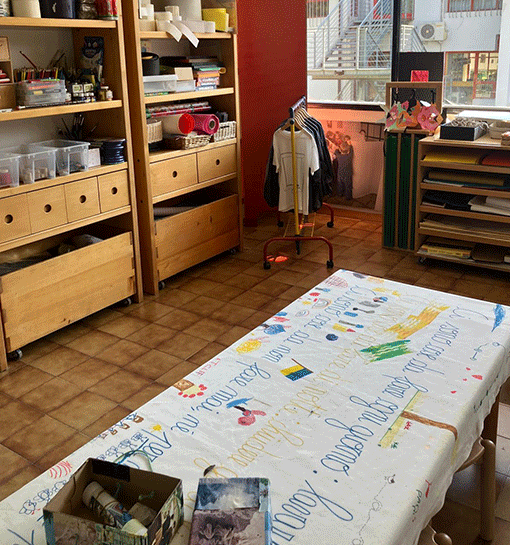
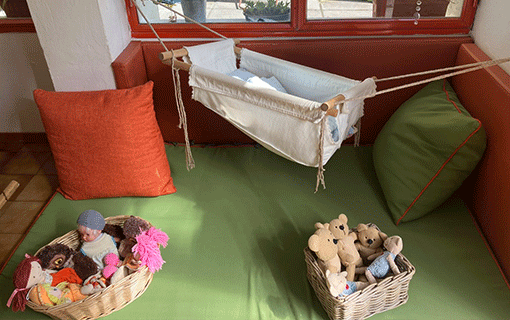
“In the nidi, children were calm, curious and naturally motivated to explore their surroundings. The settings were thoughtfully furnished and decorated, with children at the centre of everything – from resources being accessible at child height to personalised wallpaper created from children’s artwork. When children see that their work is valued, they feel empowered and excited to learn.
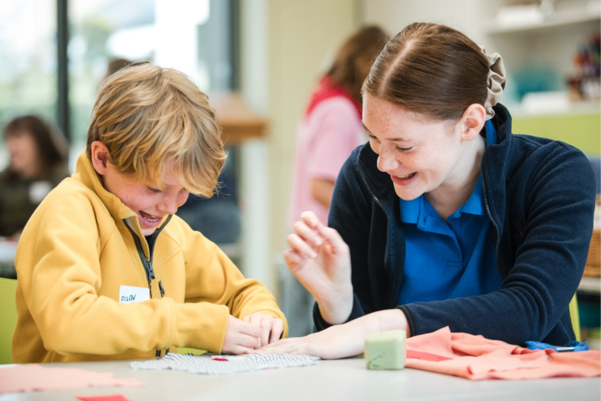
“The Pistoian approach, involving parents and extended family in children’s learning, really stood out to me. Children learn skills from trusted adults in their community, such as sewing with their grandmothers. This creates a consistent, supportive learning experience and helps build a deeper understanding of each child’s interests and development.”
Child‑centred practices
Third-year student Charlotte (Set 147) reflected on the value of slowing down and truly listening to children during the study visit.
“The best thing that I learned on the trip was the importance of truly listening to children and moving at their pace.
“The practitioners and places in Pistoia really showcased the importance and the benefit of moving at the child’s pace, giving them the opportunity, time and space to fully appreciate, explore and understand the topic they are interested in.
“We saw first hand the children’s willingness to engage in topics over an extended period of time and how much they thrived from having the practitioners fully realise the ideas and projects that the children wanted to achieve.”
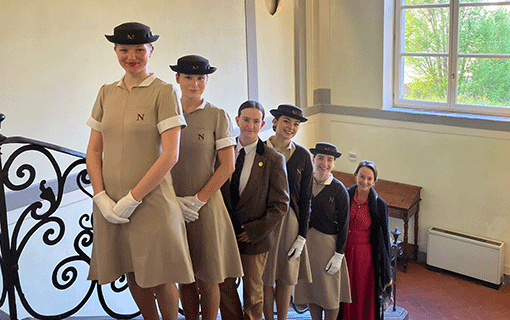
The annual optional Pistoia study visit supports students’ academic learning while encouraging personal and professional growth. By engaging with international perspectives on early years education, students are challenged to reflect critically on their own practice and consider how global pedagogical approaches can inform their future work as nannies and early years professionals.
Find out more about studying the BA (Hons) Early Childhood Education and Care at Norland and how real-world settings and international study opportunities enhance our student experience.